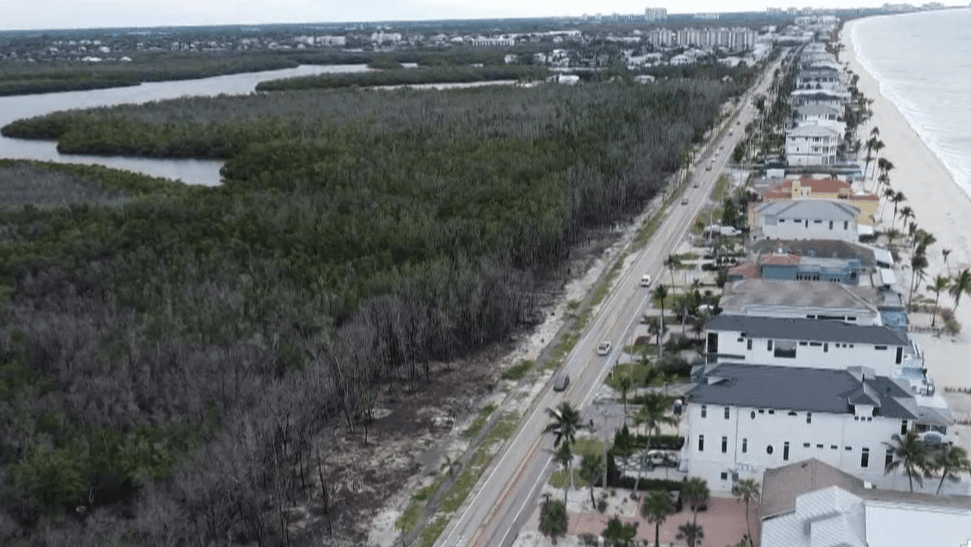
Just like Fort Myers Beach, Bonita Beach was hit hard by Hurricane Ian. Homes were destroyed by storm surge and debris littered the mangroves. Visit the area now, and you'll notice that it has come a long way – except for one spot.
A pair of lots that before the storm were covered by living mangroves aren't what they used to be, with dead branches and standing dead trees remaining. These same trees now have some worried that they could become a fire hazard during the dry season.
Amid the heavy beach traffic on Hickory Boulevard, Bonita Resident Robert Klein likes to walk his dog on the sidewalk from his home on McLaughlin Blvd. Before Ian, he liked to admire the mangroves that grew along the roadway.
"It was; it had lots of trees, all the way out to the sidewalk, the street over here," he explained.
Thanks to the storm surge, these mangroves are a shadow of their former selves, with standing dead trees and branches remaining, creating a new concern.
"Because there are over 150 acres of mangroves and trees and stuff there, and we are just across the street. It definitely would cross my mind if a fire started. I would be a little worried, nervous," Klein said.
He's talking about the possibility of a brush fire this dry season, something you normally don't see in places where mangroves grow. But as we learned from Bonita Springs Fire Chief Greg Dewitt, fire officials are also concerned about it.
"Fairly damaged, probably had a lot of salt water intrusion, which in return, killed most of the mangroves in that area." Chief Dewitt said, "Any dead, downed trees are a fire hazard. Especially when it comes to this time of the year, I know we are getting rain today."
But even though officials might consider these mangroves to be a fire hazard, ultimately, it's up to the owner of the mangroves to do something about it.
"I would just say, getting some kind of horticultural person in there, get state approval of course to cut it down, because they are going to want to make sure you are cutting down dead wood, not live wood," Dewitt added.
According to the Florida Forest Service, cases like this are unique, not only because of the protected mangroves, but also because of the marshy area here, making the current fire risk fairly low.
But come the dry season, with so much standing dead wood, local fire officials worry that could change, meaning any effort by the land owners now could save firefighters the time and resources needed to deal with it later.
"In the end, it's about Public Safety, doing the right thing, saving dollars now rather than when it catches on fire. We've got helicopters, buggies in there, brush trucks, and bulldozers. If we can do something on the front side, it's going to help us on the back," Chief Dewitt said.