
Gary Stone, an eccentric nature enthusiast from St. James City has gained local fame through his Facebook videos, which show him interacting with manatees. These same videos have also landed him in legal trouble. Stone was arrested in March of 2021 for harassing wildlife after people reported his videos showing him touching manatees.
"I was originally facing a felony charge," Stone explained.
Refusing to plead guilty, Stone fought the charges for years, eventually getting his felony charge dropped. His other charges were reduced to misdemeanors. Recently, weeks into the for misdemeanor harassment charges related to his manatee videos, the state dropped the case entirely.
"The prosecution brought forward their expert witness Denise Boyd, who testified under oath that touching them is harassment," Stone said. "That's why the judge cautioned the state that that is not true; that is not what the law says."
Manatee experts agree but say this claim needs context.
"So unfortunately, it is not illegal to touch a manatee," said Dr. Beth Brady of Save the Manatee Club, "it is illegal to disturb, harass, or annoy a manatee but there's a fine line between what is actually touching and then disturbing a manatee."
Stone insists that his interactions with the manatees are consensual and that they often initiate contact.
This situation raises the question: Can a manatee consent to physical contact with humans, and where does the law come into play? The judge in Stone's case addressed this issue, noting that the legislature did not specifically include touching in their list of prohibited activities.
"What the judge told them was, if the legislature wanted to include touching in their list of prohibited activities, they would have done so," Stone said.
Despite his legal victory, Stone's behavior remains controversial. Florida Fish and Wildlife officials and conservationists argue that touching manatees can still be harmful.
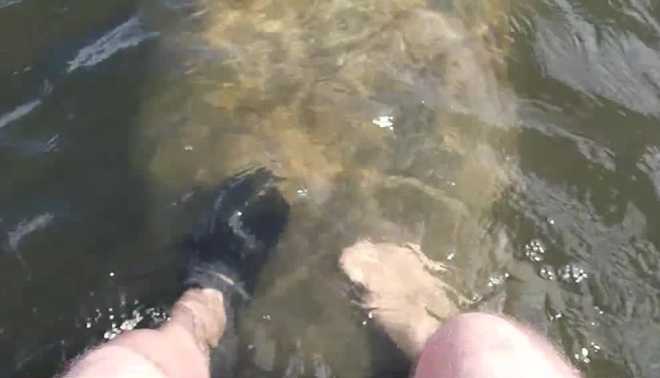
In response to inquiries about the case, Florida Fish and Wildlife stated that touching a manatee may sometimes constitute harm or harassment, with wildlife officers determining the severity of each instance. Dr. Brady also expressed concern, saying that habituating any animal-to-human interaction can lead to increased risks. For manatees specifically, it can increase the risk of boat strikes.
"Touching any wild animal can lead to them being injured," Dr. Brady explained. "It is quite frustrating to see that it's blatant and [Gary] puts it out there for all the public to see. People see this and they want that interaction and it's not always what's best for the animal"
Despite differing opinions, Stone continues to interact with manatees, feeling justified by the legal outcome.
We reached out to the State Attorney's Office to ask why they dropped the charges against Gary Stone, and whether they planned to file new charges. We were told the prosecutor requested more material to review for the case. They gave us no further information.