Shark week might have just turned into shark summer in Florida.
Shark attacks have persisted into the summer months than in any other state.
In 90 minutes, four miles apart, two cases of mistaken identity. Sharks attacking beach goers instead of fish right along the shore in Walton County, Florida. Just seven hours to the north of Southwest Florida.
"Certainly tragic, a silver lining there is that these weren't fatal,” Florida Gulf Coast State University professor of fisheries ecology David Stormer said. “The heroic acts of the first responders and the medical team did an amazing job at treating these bite victims.”
Luckily, last month's bites were only surface-level wounds. But we wanted to dive deeper. Are sharks getting closer to shore?
“Local marine police officers have reported bull sharks were following schools of baitfish in the area where one of the bites occurred,” Stormer said. “And given the severity of the bites from one of the victims, that might suggest the culprit being one or more bull sharks, which are certainly common.”
Stormer said there is a simple explanation for why these apex predators are coming into the shallows. They are following their food, like tarpon.
“We know that shark activity is in Florida at its peak between April and October, which coincidentally is also the period when humans are more likely to be in the water,” Stormer said. “So those kinds of interactions might be more frequent during this time. And according to tagging data, sharks typically inshore during the spring and in the summer.”
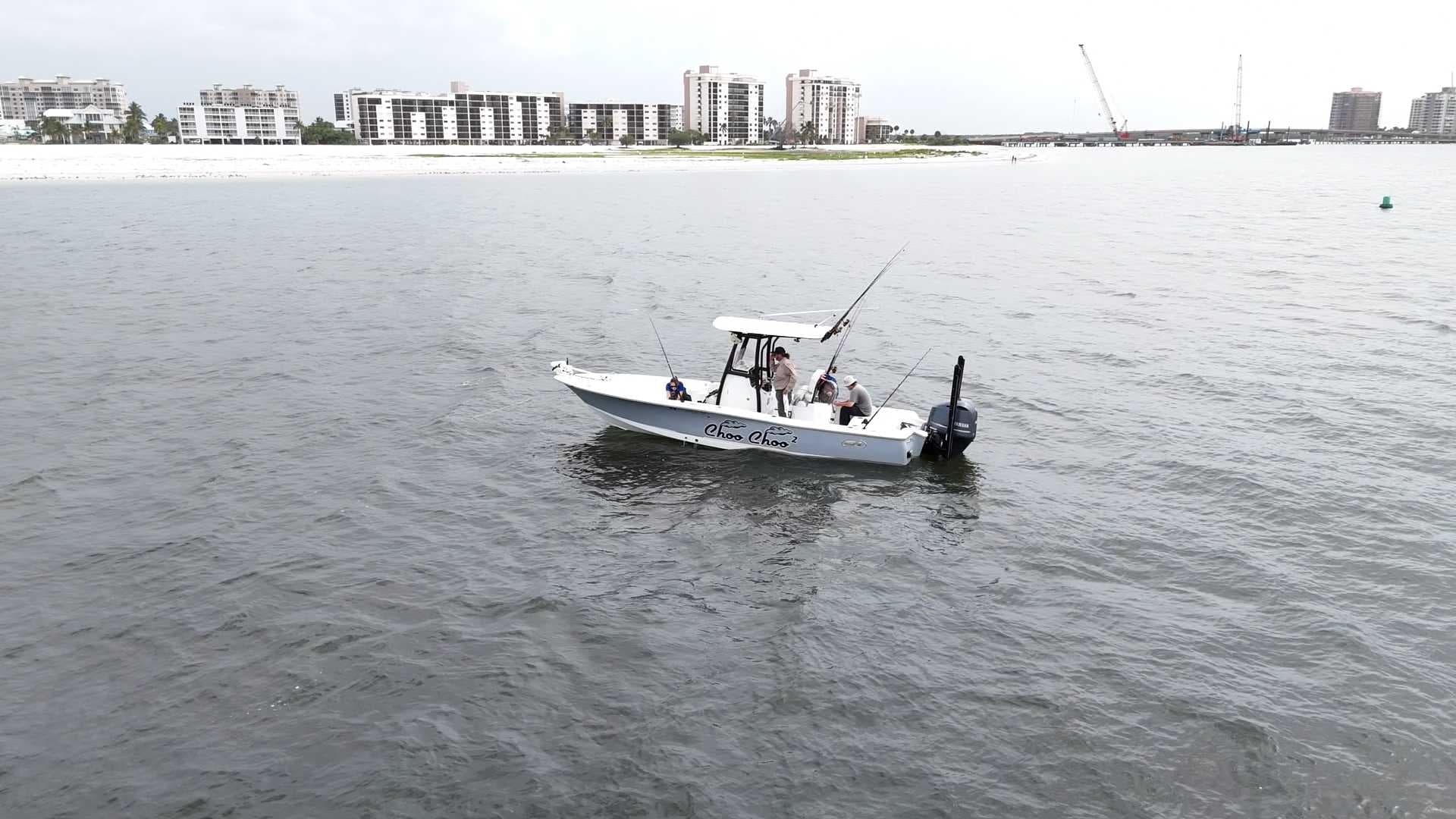
We wanted to find out if sharks are also moving in on Fort Myers beach shores too. ABC7 found boat captain Brad Maybank to take us out on the water.
Maybank is an avid shark fisherman.
“The old saying is you can't get in our water and not be within 100 feet of a shark,” he said.
But to know how to catch them, you have to understand their behaviors.
"Their job is to eat dead and decaying fish,” Maybank said. “So with all the traumatic things we've had happen in the gulf over the last 20-plus years, you know, they're here to do their job."
The first thing you need is fresh bait.
We drove a few miles offshore near Lovers Key, where Maybank baited his hook and cast a line into the gulf.
“Within 20 minutes, if there is a shark in the area, it'll smell this bait and get after it,” Maybank said.
We had a few bites, but on this day, the sharks were not interested.
“The shark tests their food by way of biting it,” he said.
Sharks often "test bite" potential food to see if it's something they want to eat. If it's not, they will spit it out and move on. This could explain the reason why people who are bitten have high survival rates.
The fact of the matter is, that sharks do not want to eat us. When we go into the water, we are going into their home. Most bites are accidents.
“They're here doing their job, trying to get us back to clean water, we can do a lot as humans to try to pick up your trash, be responsible stewards of the water,” Maybank said. “But ultimately, they're the ones doing their job in garbage disposal on the bottom.”
Experts said the water is their home, and we need to live safely together.
“I suggest staying out of the water at dawn or dusk to the crepuscular periods,” Stormer said. “Those areas right before dark or right after, right at sunrise, that's when sharks are most actively feeding. Their vision is also much more acute than hours, particularly underwater as well as baitfish.”
If you are still nervous about getting in the gulf, just consider this, you are 300 times more likely to get struck by lightning than bitten by a shark.