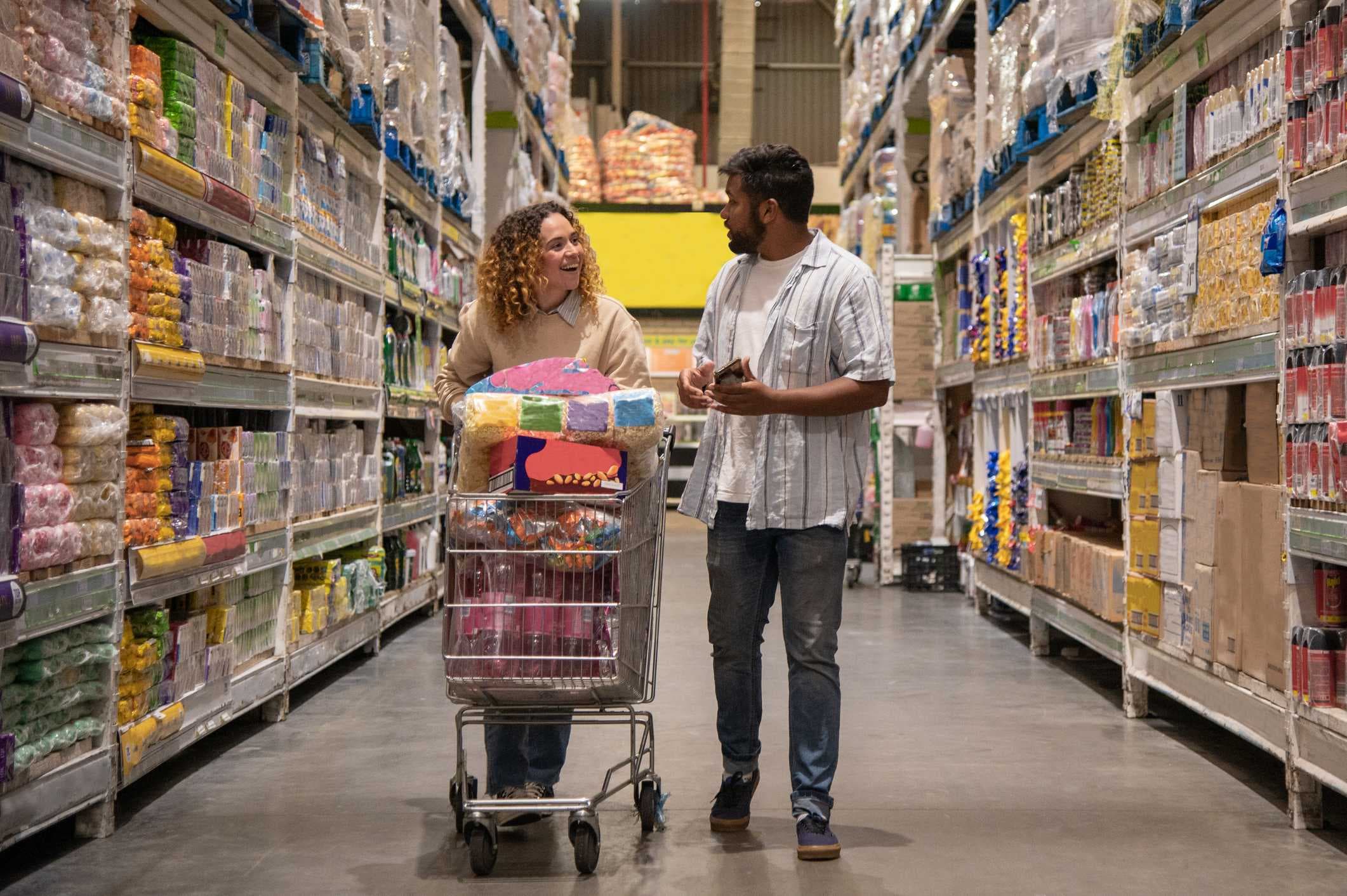
In an effort to save on grocery spending, families are increasingly turning to bulk buying at big box stores like Costco and Sam's Club, and splitting their purchases.
Marissa Verna, who splits bulk items in her grocery cart with her sister Jill, said, "I don't need 40 bags of this toddler snack like, 'Do you want to go halves on it? And I'll just send over 20 bags for you, and I'll keep 20 bags' and vice versa."
For Kristy Davies, a mother of five in New Jersey, this strategy has helped reduce food costs by nearly $75 every week.
Janet Davies, Kristy's mother, said, "When I buy in bulk, sometimes it's too much. So I'll share it with Kristy." Janet coordinates bulk grocery runs with her daughter; they split the bill and then divvy up food like cantaloupe and bananas.
Kristy said, "In my mind, I'm like, 'Is this something that I can wait for and we can get at Sam's Club?' because I'd rather not spend that price at the grocery store if I can help it."
Despite the potential savings, new government data shows grocery prices are stabilizing after rapid increases over the past three years. Yet, the typical family is still spending about 11% of its disposable income on food, the highest level in three decades.
Experts caution that buying in bulk is not always the cheaper option.
Hitha Herzog, a retail analyst, warned, "If your group is the type that would go and buy very expensive pre-wrapped charcuterie boards or pre-cut vegetables, and then you try to split that up, the price that you are actually saving isn't that much relative to you just going and purchasing the vegetables or the meat on your own."