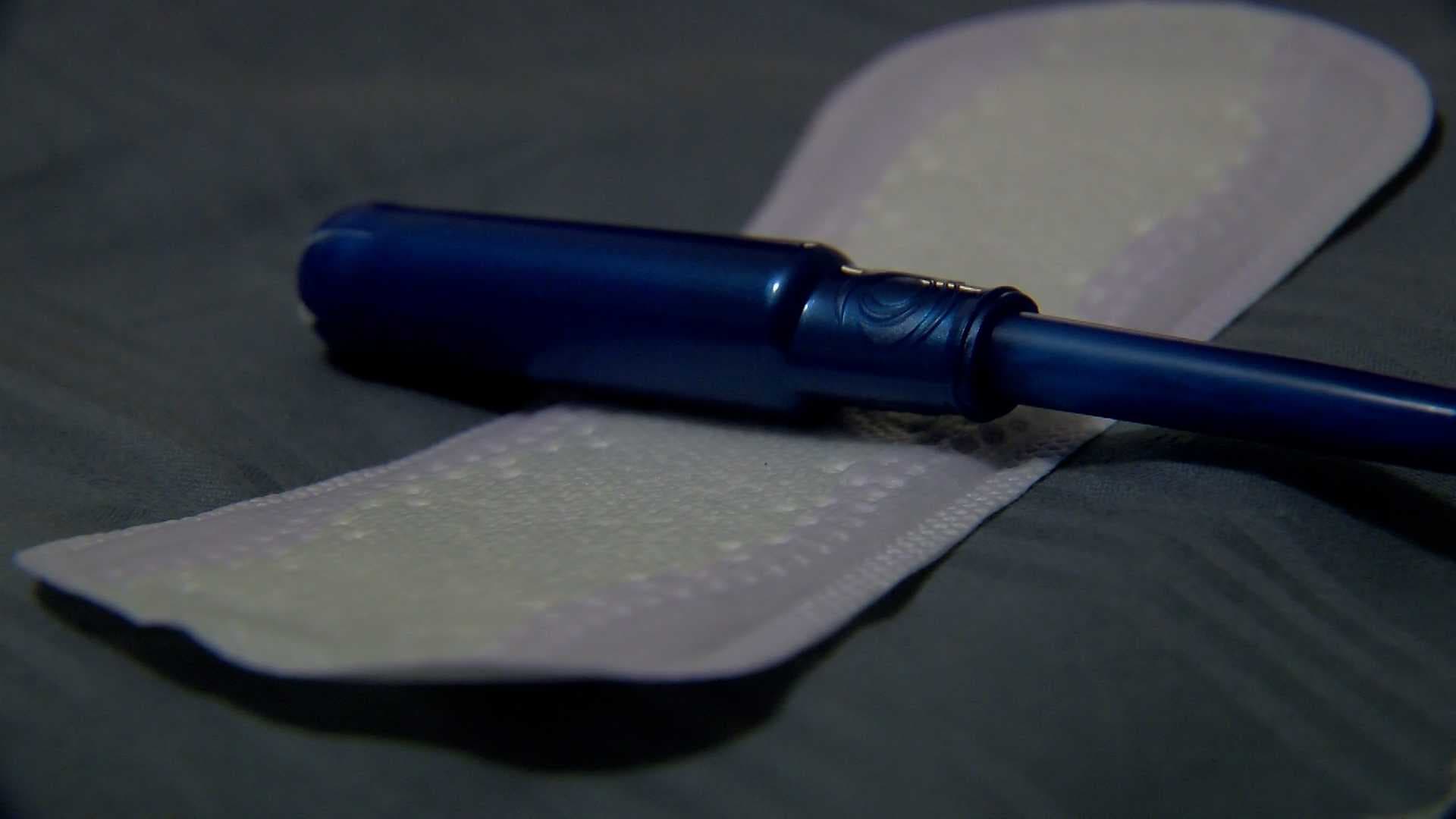
Many women are rethinking the products and brands they reach for during their period after a study was released on materials inside tampons.
The first study of its kind was released to measure metals like arsenic and lead inside tampons.
“I feel like somewhat, especially online on social media, it's definitely kind of blown up,” FGCU student Lilah Wilcoxson said.
Each time Wilcoxson has opened social media recently, she has seen conversations pop up about potential toxic metals inside her tampons.
“I've seen mostly on TikTok stuff,” she said. “People freaking out, saying that they want to throw all their tampons and pads away and wanting to switch brands and trying to figure it out. So I think it's just a lot of chaos at the moment about it."
One study Wilcoxson sees her followers talk about was done by university professors at UC Berkeley, Columbia, and Michigan State.
They said several name-brand tampons used by millions a month contain 16 types of metals including, lead, arsenic, and cadmium.
In high exposure, these metals are known to increase the risk of dementia, infertility, diabetes, and cancer.
“I mean, initially it is kind of concerning, honestly, to see all these kinds of toxic metals and are in there,” Wilcoxson said. “I read through a little bit of the study, and I just feel like maybe more could have been done in the research itself. And I think it's just kind of a call to action that there needs to be more studies done about women's health care and menstrual products and all that kind of stuff.”
ABC7 wanted to find out more about what this means for you and your health. So we brought our concerns to FGCU professor and registered nurse Christina Dzioba.
“This is not something that's added to the product, this is something that is contained within the fibers and within the actual making materials of the pads and tampons that we might use,” Dzioba said. “So it's part of the natural product. Cut to here it's coming from the ground, probably into the fibers.
She said metals are found contained in most things we touch daily, but the good news is tampons do not seem to have high amounts of them.
“A lot of products that we use contain trace amounts of various organic compounds and metals,” she said “That's just part of our world. For instance, if you use a faucet that's coated in chromium, and underneath that is nickel. So we're always touching metals. We're always touching things throughout our day. Our makeup, for instance, may also have different pieces in it.”
Dzioba said most times our makeup products have higher traces of metals than tampons. The difference between makeup and menstrual products is FDA approval.
“So pads and tampons pads are considered to be also a type of, FDA product,” Dzioba said. “So they are medical devices. So anything that's inserted or touching the body, in this case, pads and tampons are considered to be a medical device. So they're regulated through the FDA. If a producer of them makes a change, they have to go through a vigorous cycle, say, this is what we're going to change.”
Dzioba used to make menstrual products like tampons so she knows well how they are created. She said they have natural cotton fibers spun in a certain way that they only absorb materials instead of leaching out.
“I think women just need to know that, it's a very, very low risk is what they believe,” Dzioba said. “And again, there will be more studies coming out about it. But we've had pads and tampons in the same form since the 1970s and even earlier in the 1920s. So we haven't studied it extensively, but the preliminary data shows maybe a small, small impact, certainly no more than anything else that we use in our bodies.”
Lilah hopes to read more studies soon.
“I feel like there's kind of a lack of them, especially about like what kind of metals we're absorbing when we use those products,” Wilcoxson said. “I think that would be a good essential thing to know."
ABC7 reached out to the FDA for more information and to ask how extensive their testing processes are before tampons are put on shelves. This is the statement from them.
“The FDA is reviewing the study. All studies have limitations. While the chemical method used indicates these metals are present in the tampons tested in the laboratory, the study does not assess whether any metals are released from tampons when used in the body. It also does not address whether any metal, if released, can be absorbed into the vaginal lining or, subsequently into the bloodstream. We plan to evaluate the study closely, and take any action warranted to safeguard the health of consumers who use these products.
The FDA requires tampon manufacturers to comply with FDA requirements for manufacturing to assure the safety and performance of these devices. In particular, manufacturers must establish Standard Operating Procedures (SOPs) that assure appropriate quality assurance activities are conducted on the raw materials, at various points during manufacture, and on the finished product to ensure the device meets all its safety and performance specifications. As a general matter, toxicity testing (biocompatibility), is one such activity. This generally includes identifying potentially harmful substances in the product, such as some metals, and assessing the risk of those substances coming out of the product, coming in contact with, or being absorbed by the human body and causing adverse health effects at that level.”