Flash flooding can happen quickly, especially in Florida (and even) in the dry season. Whether it's Summer or Winter though, when people driving get stuck in flash flooding they are almost always caught off guard by it.
Here's a few reminders about how even a little water on the road can become a problem.
Download : Get the free NBC2 News app to get breaking news and weather alerts
PROBLEM ONE: Hydroplaning
Hydroplaning is when your car's tires lose contact with the ground thanks to a combination of speed and a bit of water on the road. When you're going more than 50 mph, something as little as a tenth of an inch of water can trigger a hydroplaning event. This means it's all too common on busy, fast-moving roads like Interstate 75. A good rule of thumb is to slow down when it starts to rain. Even if there's not enough water on the road to cover it, oil left over from cars when the road was dry becomes slick as it dampens from the first raindrops of a storm.
PROBLEM TWO: LOSING CONTROL
Though you lose control when your car hydroplanes, it's often without notice. If you start to drive through standing water, even just 6" is enough in most cars to reach the bottom of your car and you'll be well aware of it. At this point, your steering wheel won't do very much good for you as you lose control over the car.
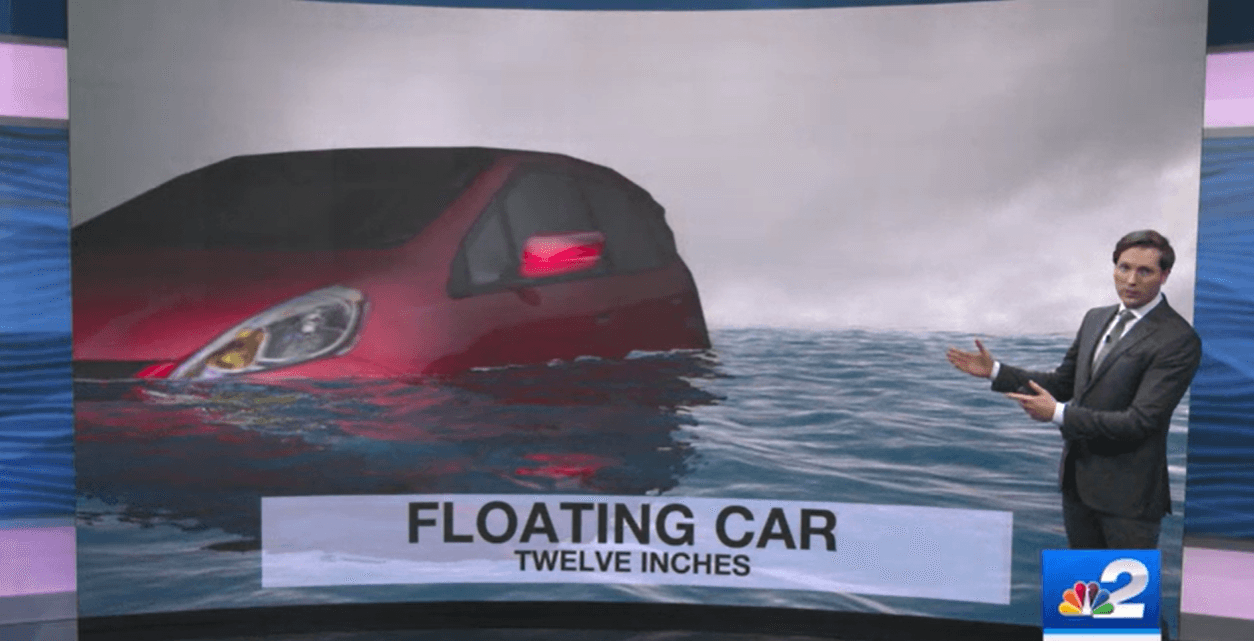
PROBLEM THREE: FLOATING
Despite the weight of your car, it'll start to float when as little as a foot of water piles up on a road. Though a foot of water seems like a lot, it can happen much faster than you may think, especially in a situation like today where rainfall rates were topping 6" per hour and the storm motion was close to stationary. This puts you in a tough spot if you try to drive through a flooded street. Higher profile vehicles like trucks and SUVs may be tempted to try to gun it through high-standing water—even to the extent where lower profile cars are getting stuck. If you're floating, there's nothing you can do to get out of their way. They may lose control, and even if they don't the wake their vehicles will produce could push you away toward somewhere you don't want to be.
As always, remember the phrase "turn around, don't drown." But when you're in the heat of the moment and on the road, flash flooding is likely going to catch you off guard. Be situationally aware, find somewhere to stop and seek shelter if the weather gets that bad. It's not worth your life, or the life of people driving near you to take a chance in astonishingly-fast flash flooding events.