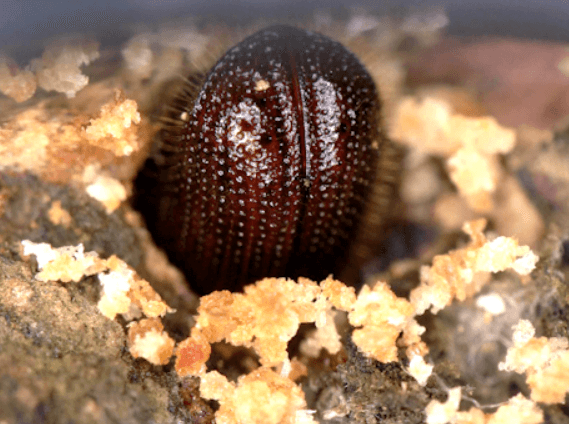
Florida's second biggest export, the avocado, is facing an existential threat from a fungal disease called laurel wilt, transmitted by the invasive redbay ambrosia beetle, according to University of Florida researchers . The disease, which is rapidly spread through the vascular systems of trees via the burrowing insect, has already caused significant damage to avocado groves and native forests in the state.
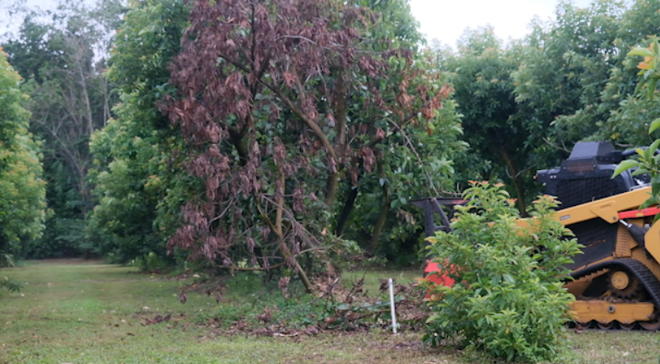
How did it get to South Florida?
The disease was first detected in 2012, after the invasive redbay ambrosia beetle made its way to the United States via wood packing, according to the Florida Department of Agricultural and Consumer Services.
"Since the beetle was discovered, we know that the avocado industry has been decimated. It's gone from approximately 7,500 acres to 4,000," said Daniel Carillo, an entomologist at the University of Florida Institute of Food and Agricultural Sciences.
"We have a lot of insects that they reduce yields, or cause damage or esthetic damage from the plant, but this one in particular kills trees, full-grown trees to the growers have had for many years. It's something we haven't really seen before," added Carillo.
How does laurel wilt impact the trees?
Florida produces about 10% of the United States' avocados, according to state financial records. Since 2012, when the disease was first discovered, laurel wilt has killed more than 400,000 trees and caused an estimated $54 million in losses across the state, per data provided to NBC2 News via the UF/IFAS.
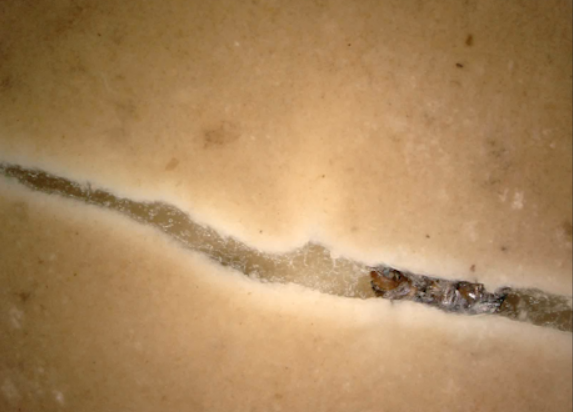
"The insects, they create these tunnels inside the trunks of the trees. They are outside the range of most conventional and management practices, like conventional insecticides really don't work," said Carillo.
Is the threat real to farmers in South Florida?
Locally, farmers have been forced to change their tactics while battling the disease in their own backyards.
"It's everywhere, and you can't see it until it's too late," said Tom Siddons, the owner of the Sleepy Lizard Avocado Farm.
Siddons' farm, located in Homestead, hosts about 20 different variations of avocados, as well as hundreds of trees and hundreds of thousands of pounds of fruit.
"The supply is definitely down in South Florida. If you used to get 50-80 years of productivity from a tree, now you get maybe 25-30 before it gets infected. That's a big difference," added Siddons.
Siddons tells NBC2 News that he knows of many avocado farmers, and farmers of other crops impacted by the disease (such as cinnamon, sassafras, and bay leaves), that have given up due to the spread of laurel wilt.
"Number one, you don't have as much fruit to sell because you lost your trees. Number two, you have the cost of having to maintain a nursery to grow your replacement fruit. Number three, that heavy equipment isn't cheap, and so we don't all own it," said Siddons.
What's the solution?
Researchers at the University of Florida's Southeast Extension are currently working on ways to create a farm environment unsuitable for the invasive beetle and other insects that may now carry the disease.
"We can't spray a topical because the insects are inside the trees ... we need to find an external solution," said Carillo.
"The disease was introduced to the country by a specific beetle, the redbay ambrosia beetle, but one phenomenon that we discovered, and perhaps the most influential and the epidemiology of the disease, is that native beetles that have similar habits as that invasive beetle have also acquired the pathogen," added Carillo.
In addition to East Coast work, botanists at the Naples Botanical Garden are rescuing infected plants, as well as analyzing areas of their nature preserve that have been hit hard by laurel wilt.
"We would go into areas where there were hundreds if not thousands of dead trees, and we would look for one that was still alive. And quite often, we would find one lone tree standing amongst several dead trees. And with all of that disease pressure for that one tree to survive, there's the potential that it has some genetic resistance to laurel wilt," said Chad Washburn, vice president of conservation at the Naples Botanical Garden.
Washburn adds that avocado seeds, unlike other plants, are fleshy and deteriorate quickly, making them an unlikely candidate for long-term cold storage.
"We want to be proactive and not reactive. So we have just over a thousand trees we've collected and grown from seed, and we keep those in conservation and we keep them so that they're small trunks and they don't get attacked by the pests," said Washburn.
Currently, no solutions exist for laurel wilt. As ongoing research continues from both sides of the Florida Coast, local farmers have been forced to adapt and survive.