Following a rise in school threats across the United States, the Collier County Sheriff's Office and Collier County Public Schools spoke to the media Thursday to discuss methods of prevention and protection. Both agencies implore the community to "Report, not Repost."
"None of these threats are taken lightly and every single one is dealt with a sense of urgency, and also that the consequences are real," said Dr. Leslie Ricciardelli, the superintendent of Collier County Public Schools.
"We're seeing all kinds of threats, but predominantly with technology. Today, you're seeing the posting of electronic information, photographs, particularly some with information embedded on them, some with a message below them," added Sheriff Kevin Rambosk.
Since the beginning of September, the Collier County Sheriff's Office has received more than 300 school threats, 132 of which were investigated.


Those cases led to four arrests, according to CCSO.
- Two weapons on-campus arrests
- Two social media threat arrests

"Brass knuckles and an unauthorized knife, and then two for electronic posting in violation of the law. It just is creating fear, amongst parents, among students, unnecessarily," Rambosk said.
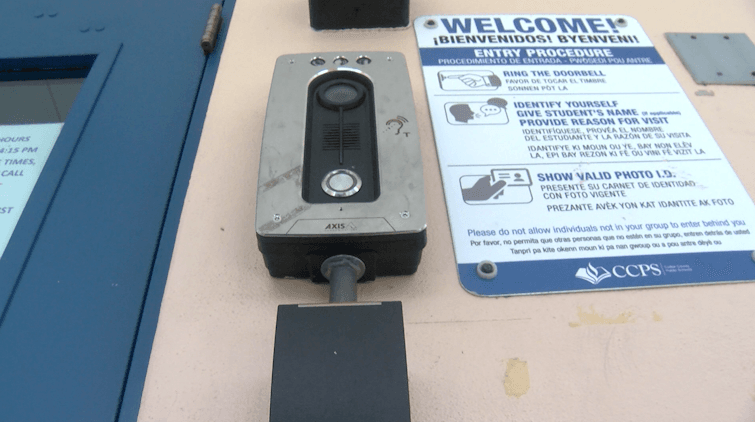
Schools in Collier County are equipped with numerous security measures, including, but not limited to:
- Fencing around campus
- Video doorbells
- Key card access doors
- Locked classroom doors
- Surveillance cameras
- Youth Relations Deputies
"Parents need to understand, there is no joke. Your child may be the top of the class. They might be the best athlete. They might never have been in trouble before, but when you make a threatening post, it is going to be dealt with with a sense of urgency and then also with the same consistency," Ricciardelli said.
Both the sheriff's office and Collier County Public Schools stress the importance of monitoring children's social media usage. Arrests for threats of violence are a felony, regardless of a child's age.
" We know mental health crisis is a big part of threats today, we will go as far as and have, knocking on the door in the middle of the night with a post, asking if, in fact, this post came from your child. They need to reach out to get help. Go to their principal, go to their teacher, go to their youth relations deputy. We're there to help them get to us before trouble begins, because it's hard to come back from that type of a case," Rambosk said.