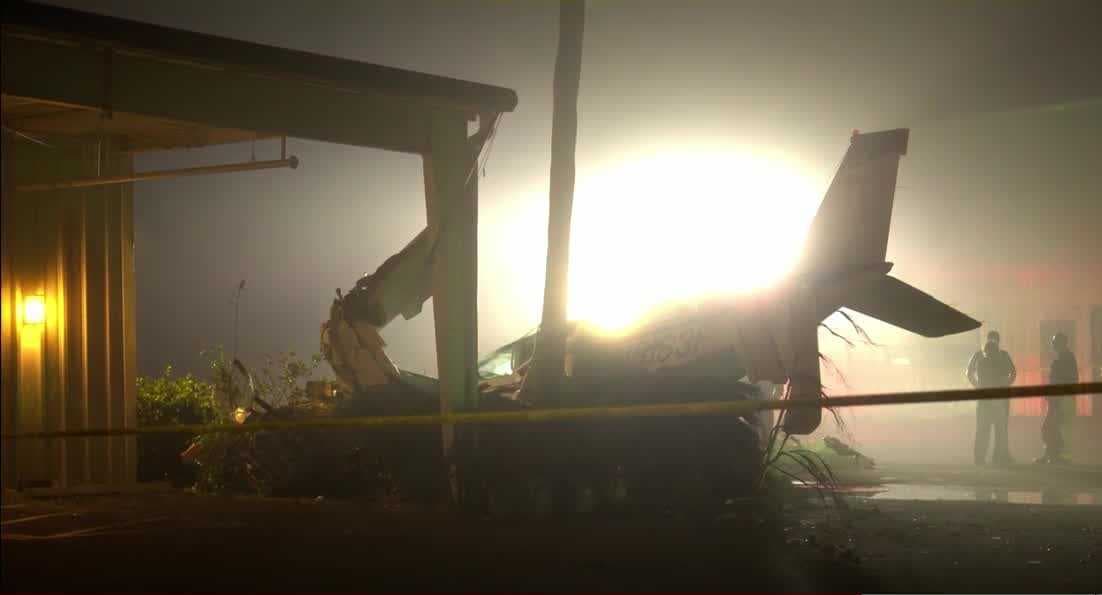
A small plane crash at Naples Airport on New Year’s Day is now under federal investigation after a series of potential errors by the pilot and poor weather conditions led to a major accident. The Beechcraft Bonanza A36, a single-engine plane known for its high performance, failed to gain altitude shortly after takeoff around 1 a.m. due to engine problems, according to the Federal Aviation Administration. The plane later crashed into two buildings and a palm tree along Citation Point.
Timeline of Events
- 1:44 a.m. : The plane, identified by tail number N8163F, attempted to take off from the Naples Airport, but lost power less than 100 feet off the ground. The pilot attempted to return to the runway but was then disoriented by heavy fog. Instead, the plane struck two buildings and a large palm tree between the Naples Jet Center and Rexair Flight Training School shortly after takeoff.
- Flight History : FlightAware records show the last documented flight for this plane was in June 2024, from Bradford, PA, to Buffalo, NY.
Conditions Upon Takeoff
- The National Weather Service issued a Dense Fog Advisory just before 7 p.m. on Dec. 31, 2024.
- Naples Airport Weather Observing System reported “ground visibility” of 0 feet and “vertical visibility” of 100 feet by 1 a.m. on Jan. 1.
- Federal Aviation Administration regulations require an Instrument Flight Plan when visibility is below 3 miles or vertical visibility is under 1,000 feet. No IFR flight plan was filed for this flight.
Flying without an IFR flight plan in these conditions is not only against regulations but also reckless. The dense fog created a zero-margin-for-error situation, and this pilot ignored those risks," said Robert Katz, a commercial pilot and flight instructor.
Critical Errors
- Failure to File Flight Plan : The pilot of the small aircraft did not file an IFR flight plan prior to takeoff, a clear violation of FAA regulations.
- Miscommunication with ATC : Recordings obtained by NBC2 reveal the pilot mistakenly contacted the Fort Myers air traffic control center, which was closed at the time of takeoff. Three attempted radio communications can be heard, with no response. Naples Airport’s protocol requires pilots filing late-night flight plans to contact Miami's control tower instead.
- Decision to Fly : Despite zero visibility conditions and lack of clearance, the pilot proceeded with the flight.
“This kind of miscommunication is troubling. Knowing which control tower to contact is basic aviation knowledge. Mistakes like these can lead to catastrophic outcomes," Katz said.
Consequences
"This gives every belief that this pilot was totally unprepared for this flight and that he made the willful, conscious and deliberate decision to depart, in violation of numerous regulations that he is obligated to comply with. He took the worst possible risk with his own life, the lives of his passengers and also people and property on the ground, because that airplane could have come down anywhere, could have come down into somebody's house," Katz said.
Violations to Federal Aviation Administration regulations, can include fines upwards of five-figures, as well as the revocation of a pilot's license, future safety training, and re-certification.
“I’m inclined to believe the FAA is going to come down on him very hard,” Katz said.
The Aircraft
The Beechcraft Bonanza A36, a small, six-seater aircraft, is a single-engine plane. While widely used, it has earned the nickname “doctor killer” in pop culture, due to its reputation for crashes often attributed to pilot error upon takeoff and landing. High-profile fatalities include the "Day the Music Died," in which rock-n-roll icons Buddy Holly, Ritchie Valens, and J.P. "The Big Bopper" Richardson passed away in Clear Lake, Iowa in 1959.
The aircraft is registered to a "Ronald C. Calugar," of Flagler County. While the Naples Airport Authority tells NBC2 that the flight was headed towards that location on New Years Day. it is unclear of Calugar was the pilot at the time of the crash.
“The Bonanza A36 is an excellent aircraft, but it demands respect and skill. Without proper training and preparation, it can be unforgiving," Katz said.
What Happens Next?
The FAA and NTSB are conducting a thorough investigation, which began on the day of the crash. In addition to examining the pilot’s actions, authorities will assess mechanical issues, weather conditions, and adherence to safety protocols. The plane's debris has been removed from the crash sight along Citation Point.
“Flying is inherently safe when done correctly, but when pilots cut corners, they’re rolling the dice with their lives and everyone around them," Katz said.
All four passengers on board the aircraft were unharmed and refused any medical treatment.