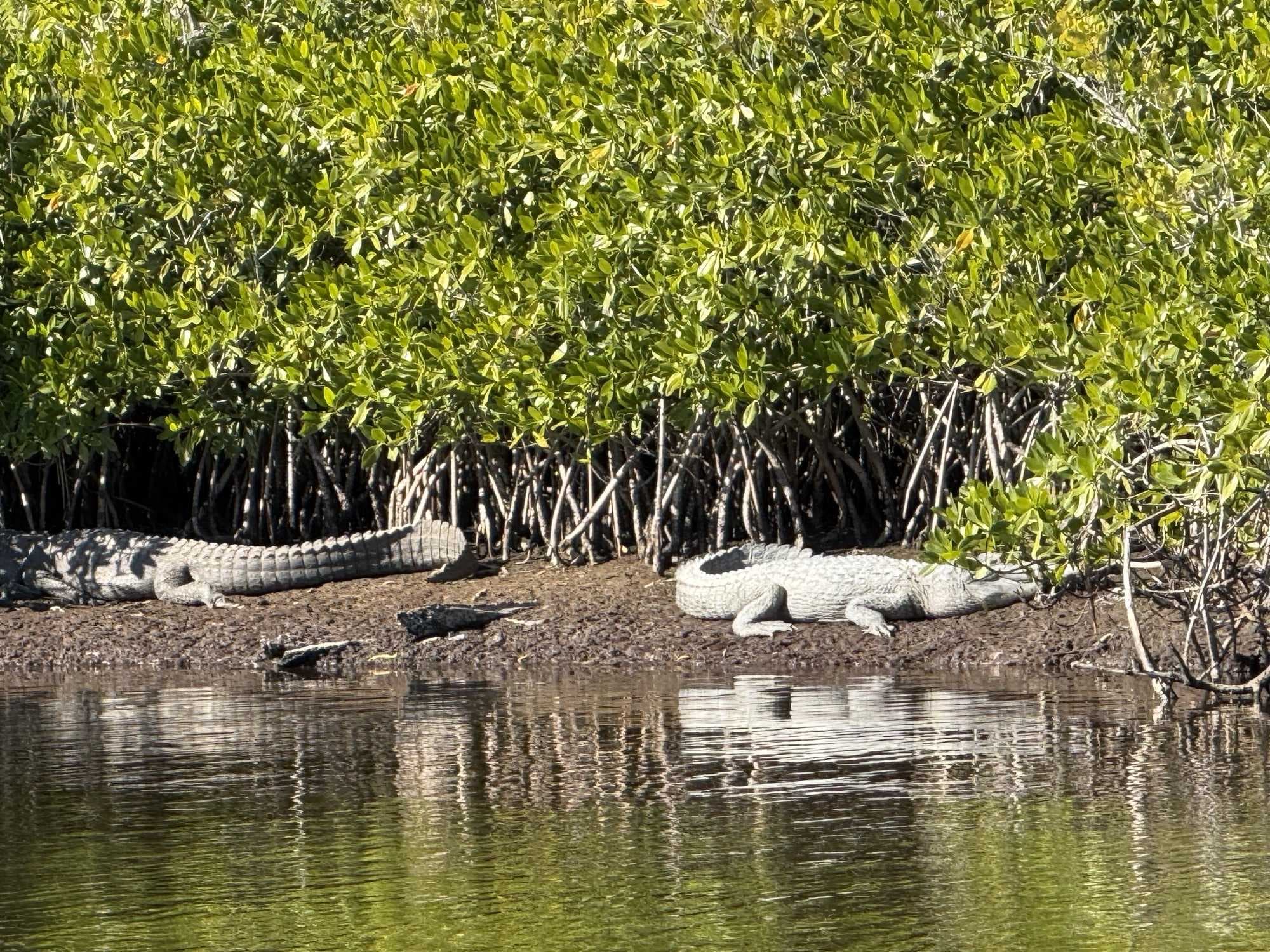
A rare albino alligator was recently spotted in the waters off Chokoloskee, leaving local captains and wildlife experts shocked.
Captain Corey McMillin, a charter guide for the historic Smallwood Store , encountered the alligator roughly 40 miles offshore in the Ten Thousand Islands. Based on the eye test and images captured by the captain, the bright-white alligator is around 9 to 10 feet long.
"I saw him once in the water, and he just glowed on the bottom ... He couldn’t hide. The next time I saw him, he was on the bank, and I thought maybe it was just mud. But then he went into the water, and he stayed white," said McMillin.
A genetic marvel
Wildlife experts estimate there are only about 100 to 200 albino alligators left in the world, most of which live in captivity (places like Zoos) due to the many challenges they face in the wild. Their lack of pigmentation, caused by a genetic disorder called albinism, makes them highly visible to prey, creating challenges in finding food.
"To see them in nature is rare. You often see them at alligator parks where they have a better fighting chance of surviving,” said Dr. Christina Anaya, a biology professor at Florida Gulf Coast University.
Albinism occurs as a genetic condition, when an individual’s body doesn’t produce melanin, the pigment responsible for coloration in skin, scales, and eyes. The alligator's skin is nearly a translucent white.
“Albinism is an autosomal recessive trait, meaning both parents must contribute a recessive gene for the individual to be an albino,” said Anaya.
The condition occurs in roughly one out of every 75,000 alligators.