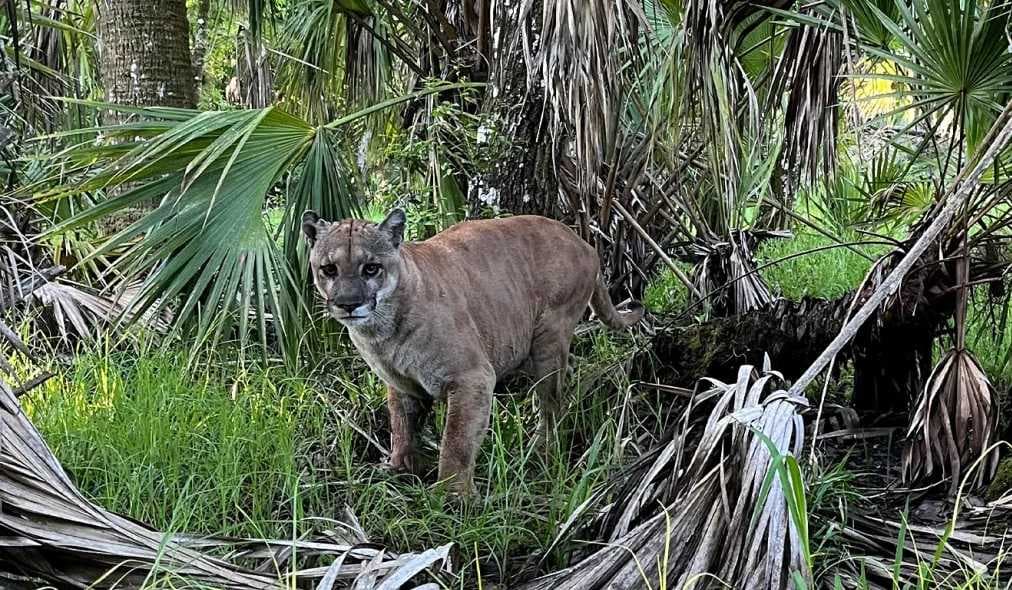
Conservationists, environmentalists, residents, and wildlife advocates gathered Wednesday morning for a Panther Country Tour de Sprawl, an event aimed at raising awareness about the threats posed to Florida panther habitats by large-scale housing developments.


The event was organized by groups including Sierra Club Florida, the Conservancy of Southwest Florida, and the Center for Biological Diversity, and began at the Naples Zoo, featuring stops at key locations in the Western Everglades.
A Day of Exploration and Advocacy
The tour’s first stop was the Florida Panther National Wildlife Refuge, located near the small incorporated area of Miles City near Everglades City. The area is nearly 30,000 acres in size, and hosts many species of wildlife as well as Florida Panthers.
“The habitat we provide is diverse. It includes Saw Palmetto, which is one of the primary denning habitats females need," said Erin Myers, the manager of the land.
A planned housing development, Bellmar, would border the facility. Despite environmentalists calling for the suspension of the project, the community's website claims they plan to focus on conservation.
"Our planning team will continue to study wildlife and ecosystem issues, working with Florida and national panther experts, as well as experts in conservation biology, water quality, and other disciplines," said the group.
Following a brief hike along the Memorial Trail (which is open to the public), attendees visited the CREW Cypress Dome Trail along the Lee-Collier line for further discussions. That area borders another project, the proposed Kingston Development.
"We stopped the lime rock mine in the process of getting permitted, saved 145 acres of wetlands, and are cleaning up the abandoned citrus groves destroyed by hurricanes. We’re planning on creating 3,500 +/- acres of conservation land, more than 50% of the project," said Tony Cameratta, the head of the project.
Mounting Threats to the Florida panther
Speakers stressed the urgency of conservation efforts, citing statistics involving Florida panther deaths.
In 2024, 36 Florida panther deaths were recorded, the highest number since 2016. Vehicle collisions accounted for 30 of these deaths, making it the leading cause of mortality, according to the Florida Fish & Wildlife Commission.
“The Army Corps of Engineers is deciding on six large projects that would impact tens of thousands of acres of panther habitat. If these projects go forward, we’d be worried about the future of the Florida panther, period," said Amber Crooks, the senior policy advisor for the Conservancy of Southwest Florida.
Florida panthers have an estimated population of 120 to 230 panthers remaining, according to FWC statistics.