
Splash pads can be found in public places up and down the Gulf Coast. While they can be a fun way to cool off, a new report warns families about the health risks associated with the fountains.
Gulf Coast News got an exclusive, behind-the-scenes look at the technology designed to keep you safe.
The splash pad at Veterans Park in Lehigh Acres is popular on warm weekends. Just ask dads like Cory Alvis. “It's convenient because it's gated,” Alvis said. “You can kind of just throw their trunks on, and, you know, they just kind of go run and have fun.” Alvis brings his boys to the park to enjoy the weekend. They also enjoy the splash pad at the park. “I've taken them to this one many times,” Alvis said.
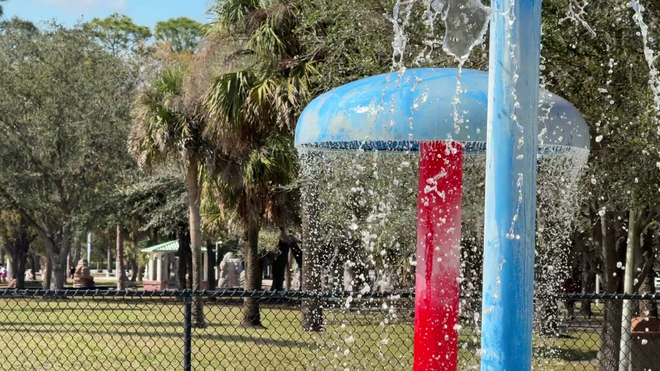
Before they get in the water, Alvis explained, “Before we go, I try and tell my kids, like, hey, this is not drinking water. We're not drinking it. If I see you drinking it, like we got to go.”
It’s good advice for families visiting splash pads anywhere on the Gulf Coast.
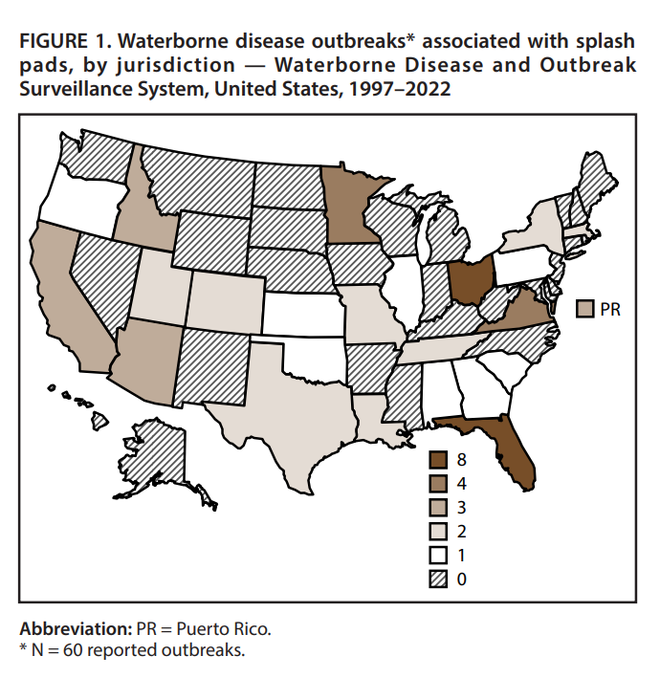
A new report from the Centers for Disease Control and Prevention shows Florida splash pads have been linked to waterborne disease outbreaks over the years. The CDC found between 1997 and 2022, public health officials from 23 states and Puerto Rico reported 60 outbreaks associated with splash pads.
In that report, Florida is mentioned eight times. Florida is tied for the top spot with the state of Ohio.
“I think it's just a good reminder to our staff that operates the aquatics facilities,” said Andrea Miller, City of Sanibel Director of Recreation. “Typically, you're seeing younger children that are using these splash pads,” Miller explained.
Some of those children may have dirty diapers or soiled swimwear. The bacteria from their body can make its way into the water and spread when other people get the water in their mouths. The City of Sanibel uses intricate filtration systems to keep water clean. During a tour of the facility, Miller explained, “This is a dedicated pump system, filtration system, and chemical system for the splash pad. It is a separate body of water from that water to the pool.”
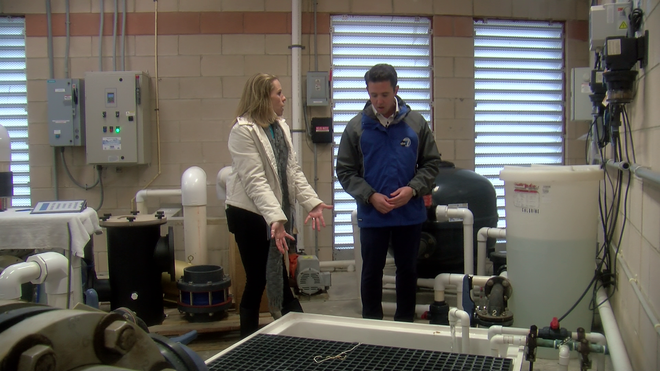
Miller added that Sanibel works with the Florida Department of Health to keep the water clean. “We always maintain our chlorine levels,” Miller said. “They have to be maintained between 1 and 10 parts per million. We test three times a day. We backwash on a regular basis.”
One of the easiest things you can do to protect yourself when playing in splash pad water is don't drink it. It gets recirculated. Miller said they have a plan in place in case there is an accident on the splash pad too.
“We have to shut down the aquatic facilities, for 24 hours. We filter for 20 parts per million, at least. At the end of that 24 hour, we backwash to filter to flush out any additional contaminants,” Miller explained.
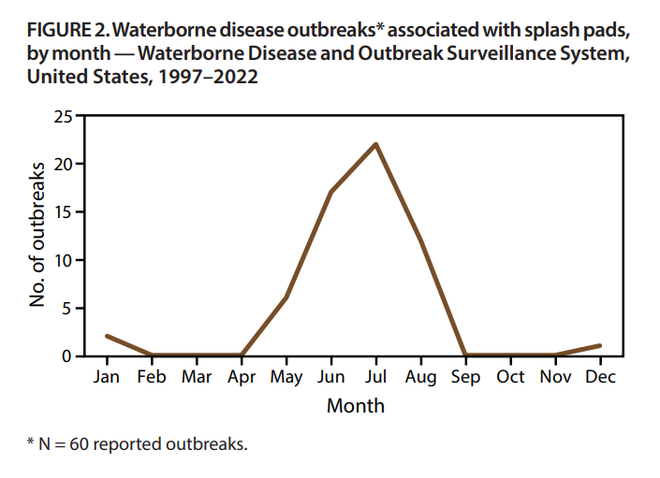
The CDC’s report showed of the 60 splash pad-associated outbreaks between 1997 and 2022 in the United States, 95 percent were reported between May and August. Specific facilities or counties are not named in the CDC report.
Gulf Coast News contacted the Florida Department of Health in Lee County about the report. In an e-mail, they said:
“Public health standards for splash pads, also known as ‘interactive water features,’ are included within the public swimming pool program. The Florida Department of Health (Department) has adopted sanitation and safety standards for public pools, defined in Chapter 64E-9, Florida Administrative Code, and enforces those rules through the issuance of operating permits and inspections. The Department ensures sanitation and safety standards comply with the design, installation, and operation of public splash pads. More information can be found at the Florida Department of Health website .”
Gulf Coast News also contacted Lee County government about the CDC report. In an e-mailed response, a county spokesperson said:
“Lee County Parks & Recreation has only one splash pad area at one park. Per FDOH – we treat splash pads like we do our pools. The splash pads have the same water chemistry regulations as pools. Splash pads are kept between 1-10ppm Chlorine and 7.0-7.8PH, which is mandated by FDOH. Also, Lee County Parks & Recreation opted to install UV sanitizer as an added defense for water cleanliness. Parks & Recreation has also installed Oxidation Reduction Potential (ORP) , PH reader and chemical controller to keep up with the demands of the water’s cleanliness.”
Similarly, a spokesperson for Charlotte County government e-mailed a response to the report and said:
“Charlotte County Community Services Department utilizes chemical automation systems that continually monitor water quality at all of our Aquatic Facilities including Splash Pads. This automation system controls the level of sanitizer (chlorine) present in these bodies of water 24 hours per day, 7 days per week. In addition to controlling the amount of chlorine present, the system also regulates the pH level present in the water which directly contributes to the effectiveness of the chlorine. At McGuire Park Splash Pad where staff is not present, a UV (Ultra Violet) sanitation system is also employed which is particularly effective in treating chlorine resistant organisms such as cryptosporidium. The chemical automation systems are also equipped with a function that sends Aquatic Coordinators alerts when something is amiss that needs attention or repair. Lastly, Charlotte County Lifeguard staff check to ensure the chemical control system is working properly every day and make needed adjustments immediately.”
A spokesperson for the City of Cape Coral responded to our inquiry, saying:
“This City of Cape Coral does not currently operate any splash pads.”
As the weather warms up, parents like Alvis say they’re glad county leaders keep health top of mind at their parks.
“You know, my kids love to just put their hand in their mouth. I just keep an eye on those things. I would just say, you know, do what you do when you're in any public place, you know, bring things to sanitize with, before or after.”
In the CDC report, no deaths were reported associated with the outbreaks they tracked.