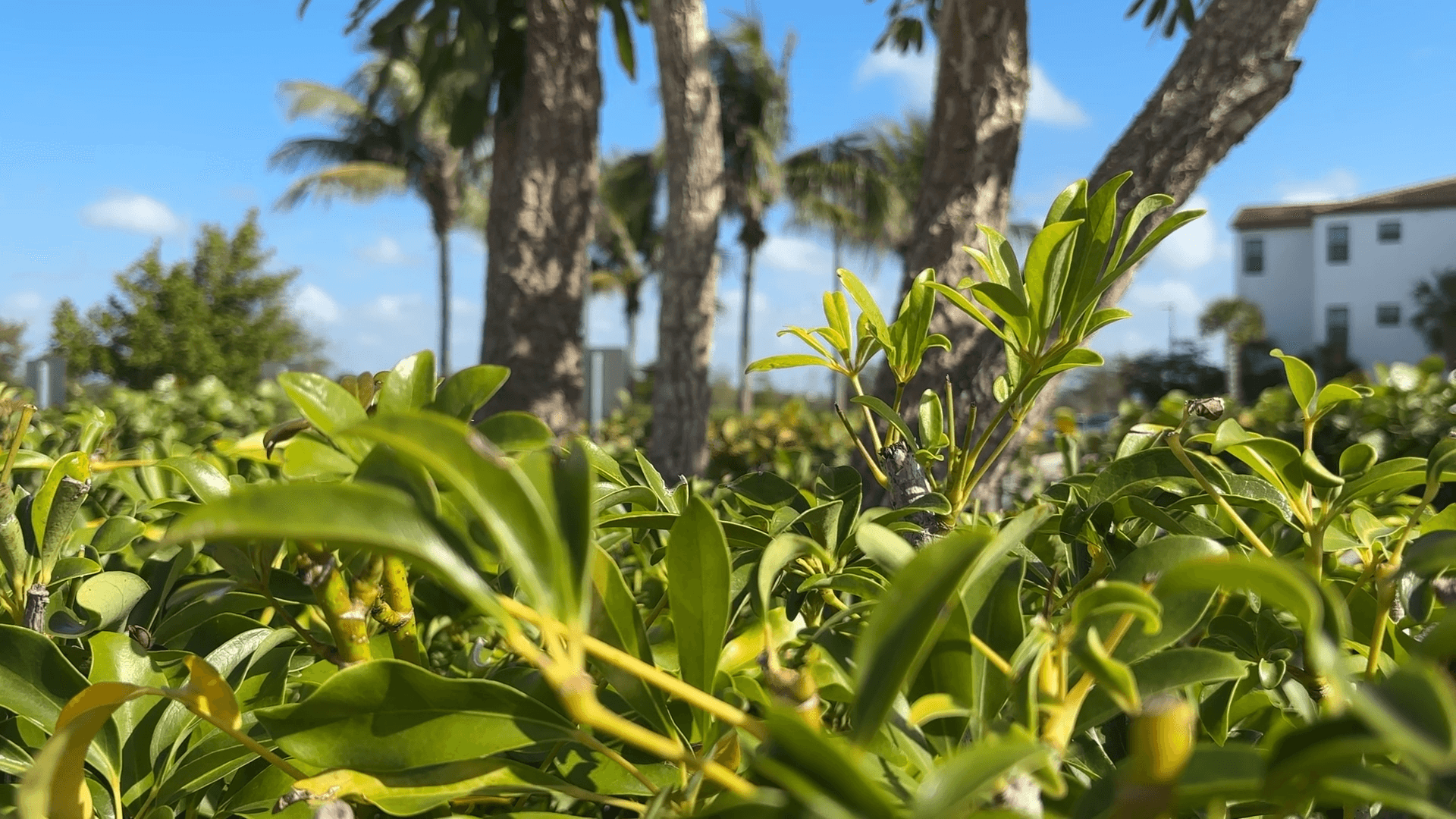
Spring is almost here, and with blooming plants come severe allergies for many.
A beautiful spring day often brings allergies to Paige Hurbanek.
“I get very stuffy—my nose and my eyes—and I also experience contact dermatitis that causes hives,” Hurbanek said. “I did an allergy test and found out I’m allergic to all of Florida, so it’s a real burden that comes around every spring.”
Paige has always suffered from allergies, even when she lived up north.
“Moving from Pennsylvania to Florida for college, I was hit hard by allergies,” she said. “I think over the years, my allergies have somewhat adjusted.”
She notices that her allergies are worse in the mornings during spring, primarily due to new vegetation.
Dr. Ronald Negrich, an allergist, explains that allergies in Florida persist year-round.
“Our allergy season lasts almost all year, and that’s one of the challenges,” Negrich said. “Up north, trees, weeds, and grass die off when it gets cold. The end of the weed season is usually marked by the first killing frost. But here in Florida, we don’t get that first killing frost to eliminate the weeds.”
It’s not just outdoor allergens that our bodies struggle with.
“It’s a never-ending cycle,” Negrich said. “We also have indoor allergens, and the humidity increases mold spores more than in other areas. High humidity is great for mold and dust mites, which persist year-round.”
The best way to break this cycle is by using over-the-counter medications. Dr. Negrich recommends nasal sprays.
“If you know your worst allergy season is coming up, it’s always best to prepare,” he said. “That means taking your prescribed allergy medications at least a week ahead of time. Usually, people start taking medication only after symptoms appear, and by then, it’s a little too late.”
Another way to reduce allergens without medication is through spring cleaning to remove dust mites.
“If you start feeling off, you might not be sick—it could just be your allergies,” Hurbanek said.