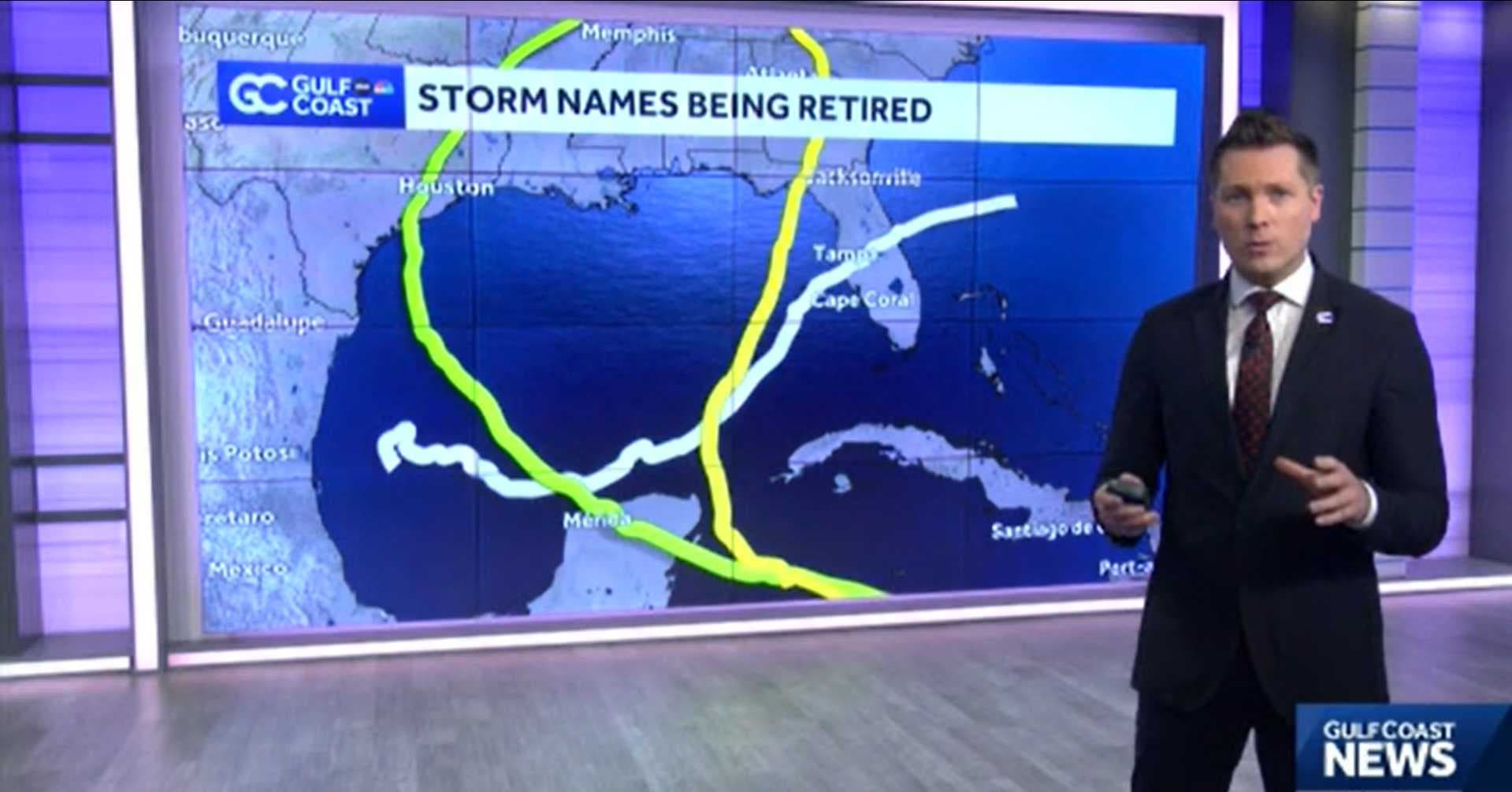
The World Meteorological Organization (WMO) is retiring Beryl, Helene and Milton from the list of storm names used in the Atlantic basin.
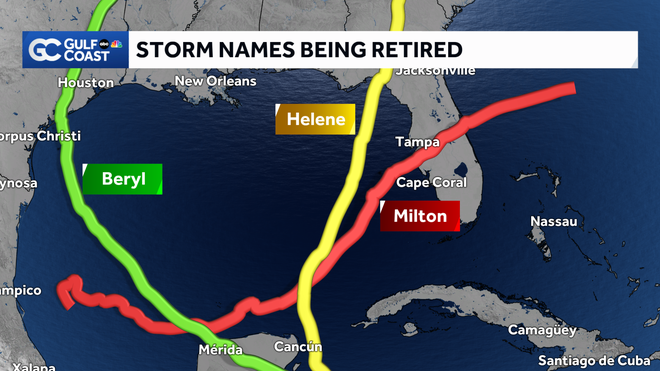
Retiring storm names is a practice done by the WMO in the offseason. Doing this removes the names of particularly devastating storms from the tropical storm and hurricane naming list that cycles through every six years.
Though Hurricane Beryl is notable for becoming the earliest-forming Category 5 storm in recorded history and the impacts it brought to Texas during its American landfall, the storm is being retired because of the devastation it brought to the Lesser Antilles.
According to the WMO, 34 people were killed as a direct result of the storm. Beryl caused catastrophic damage to islands, including Carriacou and Petite Martinique, damaging or destroying 98% of the homes there.
Hurricane Helene will be remembered locally because of the storm surge it brought to the Gulf Coast. According to the National Hurricane Center's comprehensive post-storm report , the system caused 5-7 feet of above-ground level storm surge inundation flooding from Englewood to Bonita Beach.
Helene's worst impacts were focused on the Florida panhandle and the southeastern United States, especially in North Carolina, where intense flash flooding occurred, causing catastrophic damage.
The WMO notes that Helene's death toll was 248, making it the deadliest American hurricane since Hurricane Katrina's devastation of Louisiana and Mississippi in 2005.
Hurricane Milton, which impacted the Gulf Coast less than three weeks after Hurricane Helene, will be remembered because of its remarkable rapid intensification.
According to the name retirement statement released by the WMO, "Milton's rate of rapid intensification was among the highest ever observed and at its peak, it was Category 5 intensity over the Gulf of Mexico."
Rapid intensification is a specific term that refers to when a tropical system's sustained winds increase at least 35 mph within a 24-hour window.
At its strongest point over water in the Gulf north of Mexico, Milton's sustained winds were pegged at 175 mph . A storm becomes a Category 5 when sustained winds exceed 157 mph.
According to the National Hurricane Center , Milton produced more storm surge along the Gulf Coast than Helene did, peaking nearly 10 feet above ground level near Manasota Key in Charlotte County.
In addition to retiring storm names, it is also the role of the WMO to pick new names to replace ones taken away.
When the list used in last year cycles again in 2030, the name Brianna will replace Beryl, Holly will take the place of Helene and Miguel will be used instead of Milton.
Follow the Gulf Coast Storm Team on social media
- Chief Meteorologist Allyson Rae on Facebook and X
- Meteorologist Jim Dickey on Facebook and X
- Meteorologist Jason Dunning on Facebook and X
- Meteorologist Rob Duns on Facebook
- Meteorologist Jesslyn Ferentz on Facebook and X
- Meteorologist Lauren Hope on Facebook and X
- Meteorologist Raphael Tavernier on Facebook and X
Watch your Gulf Coast Weather forecasts on TV or online
- Here's where to find our latest video forecast
- You can also watch a live stream of our latest newscast here
DOWNLOAD the free Gulf Coast News app for your latest breaking news and weather alerts.