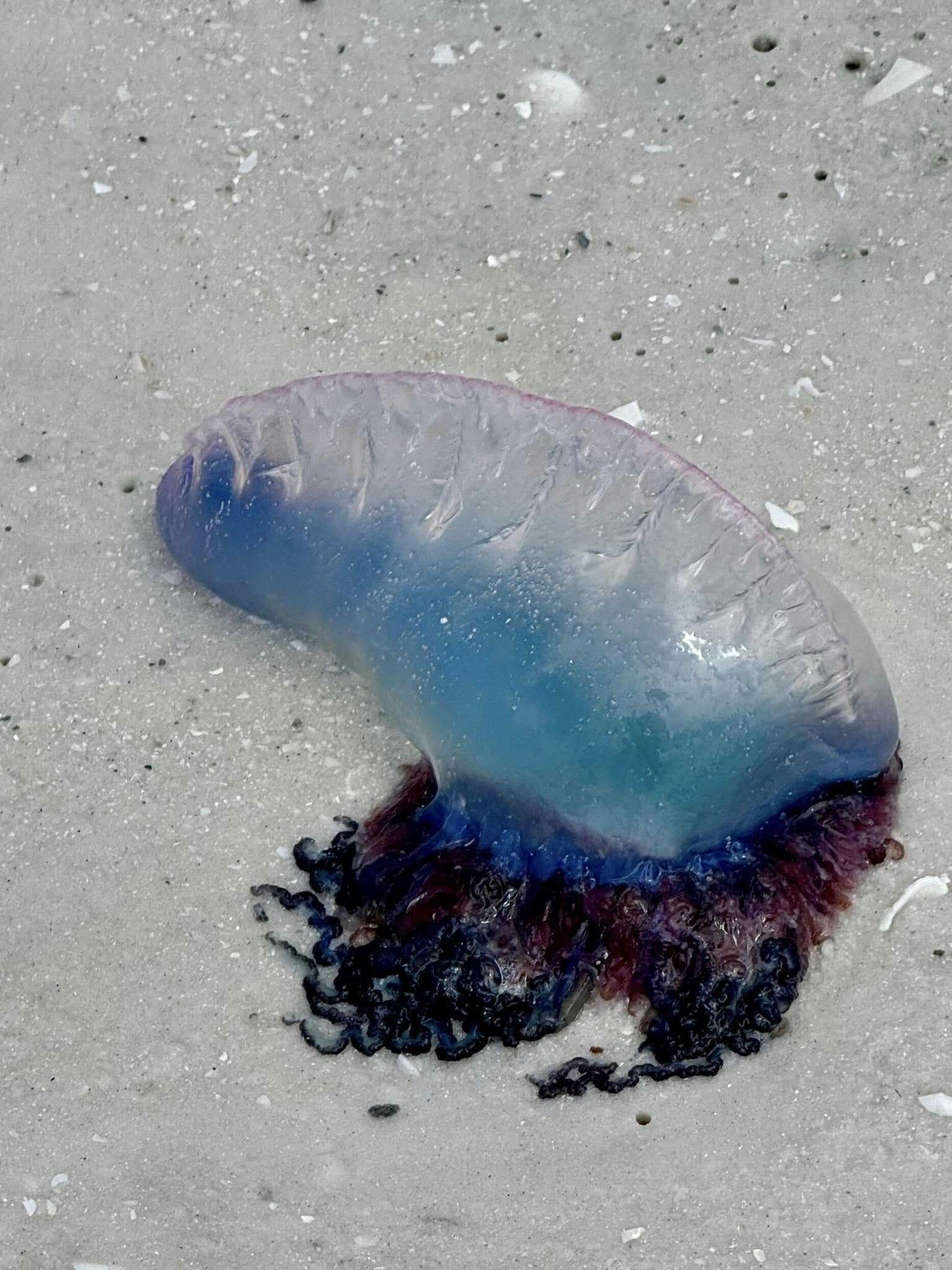
Beachgoers on Marco Island got an unexpected — and slightly terrifying — surprise when multiple Portuguese man o’ wars washed up along South Beach and nearby Sand Dollar Island.
These brightly blue-colored, balloon-like creatures are often mistaken for jellyfish, but they’re actually siphonophores — a floating colony of organisms that function together as one. Native to warmer parts of the Atlantic and Indian oceans, they’re not typically found in the Gulf of Mexico.
Portuguese man O' wars are considered highly venomous, according to the Florida Fish & Wildlife Commission and the National Oceanic and Atmospheric Administration. The sea creature's tentacles reach around 30 feet, and some have been recorded at more than 160 feet. A sting from a man o’ war can cause intense pain, welts, allergic reactions, and, in rare cases, even heart or breathing complications, per NOAA.
“We were walking the island, and the lady said, 'Hey, that’s a man o’ war jellyfish. Don’t step on it.' And then we ended up seeing like three or four of them ... We have a 4-year-old. And there was one dried up that he stepped on. With shoes on, obviously, but a little scary for a second," said Matt Swan, who is visiting from Minnesota.
Even when washed up and dried out, man o’ war tentacles can still sting. If you see one, steer clear and notify FWC.
DOWNLOAD
the free
Gulf Coast News app
for your latest news and alerts on breaking news, weather, sports, entertainment, and more.