
The Everglades is experiencing severe drought conditions, prompting discussions about whether this could lead to a more active hurricane season.
Two weeks ago, Gulf Coast News highlighted how these dry conditions are affecting airboat operators, and since then, social media has been abuzz with speculation about the drought's influence on hurricane activity. We decided to revisit the Everglades to investigate the validity of these claims.
Local impact of prolonged drought
On the southern edge of Collier County, south on US-41, recent rains have barely alleviated the dry conditions. "It's dry, the whole ground is cracked. We haven't had any rain though, it's a really dry, dry year," said Reeves Carslisle, a local fisherman.
Lynn McMillin, owner of the Smallwood Store Museum on Chokoloskee Island, shared her perspective, noting the importance of high ground during hurricanes.
"We tried to keep the deepest water, and we have the highest hill, and that is important when the hurricanes come," McMillin said.
The relationship between the Everglades and hurricanes is complex, as low-lying areas are particularly vulnerable to storm surges. However, locals expressed skepticism about the connection between dry wetlands and hurricane intensity.
Science behind drought and storms
Gulf Coast News Meteorologist Rob Duns explained that you can't make the connection that because the Everglades has a drought, therefore, we will have a bad hurricane season.
"You can certainly say there could be a connection because of overarching weather patterns that oftentimes lead to drought in the winter and busy hurricane seasons during the summer. That overarching weather feature is called La Niña. And La Niña is not a weather system or weather front or anything like that," Duns said.
It's actually when the water temperatures off the coast of South America run cooler than average that they impact global wind patterns.
Oftentimes during the years when we have La Niña, the stronger upper-level winds like the jet stream tend to stay farther north in latitude as compared to other years.
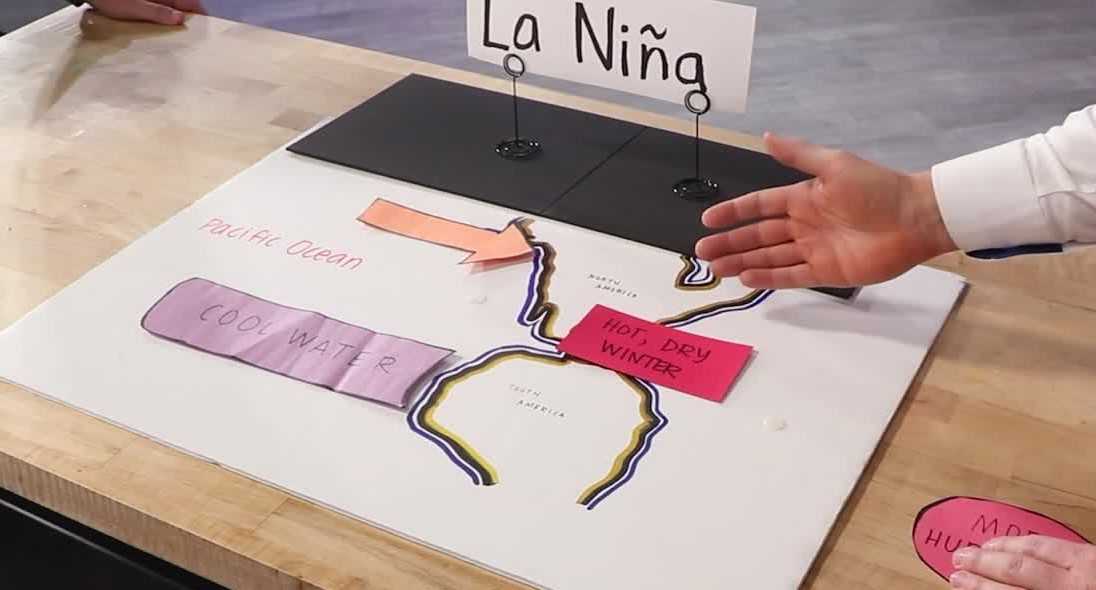
When we have this kind of setup in the wintertime, the jet stream stays farther north. That means fewer storm systems make it into Florida, so we stay dry. And in exchange, we stay hot. So in the wintertime, that can cause drought conditions.
"Now if this kind of setup stays in place during the summertime," Duns said, "All these stronger upper-level winds we referred to sometimes as wind shear, well, if they stay away from the tropical Atlantic, that means there's less wind shear for hurricanes to battle, which makes it easier for hurricanes to form, which often then leads to busy hurricane seasons."
Diverging views
What do the locals in the Everglades think about the scientific explanation?
"I don't know, I've been here for a long time, and that doesn't mean anything, but I've never heard that," McMillin said, with Carslisle adding, "I think every year is different, you just see what happens, usually we get a lot of hot weather, the Gulf gets hot, and you'll get worse hurricanes, but the water temp is not crazy hot yet."
Contrary to alarmist claims on social media, some believe the current drought might actually mitigate hurricane impacts.
"One thing about it is whenever it's not a dry season and you get a hurricane, and you have that water, that's going to be that much higher that the water comes," McMillin said. "So if it's dry, that is the only thing you have got going for you, so you have more places to fill."

While the severity of this hurricane season remains uncertain, those who live in the Everglades are hopeful for the return of rain.
"That rainwater, believe it or not, cools it down quite a bit, so if it continues not to rain by June, the water is going to get hot, and fish will start dying. Fish in the summertime will actually gravitate towards that, because of the coolness of the fresh water," Carslisle explained.
Experts agree that while the drought may not directly predict hurricane strength, it does underscore the fragile balance of the region’s ecosystem.
As residents prepare for the uncertainties of the summer storm season, many are watching the skies, not just for rain, but for signs of what might come next.
Video below: Cape Coral to Everglades, drought grips the Gulf Coast
DOWNLOAD the free Gulf Coast News app for your latest news and alerts on breaking news, weather, sports, entertainment, and more.