Meteorologist: Zach Maloch
•8/14/2026

SOUTHWEST FLORIDA (WINK) — WINK News meteorologist Zach Maloch joined Todd Lowe, Turfgrass Expert & Agronomic Consultant, Thursday in Lee County in leading a dynamic conversation about the upcoming El Niño pattern and its potential impact on Southwest Florida weather this winter.

The discussion, held with the Calusa Chapter of the Golf Course Superintendents Association of America, brought together local golf course superintendents and golf industry vendors to discuss what will be a wetter, cooler and more challenging winter season ahead.

For Southwest Florida, El Niño influences our typically dry winter months significantly. While November through March is normally our quieter stretch of the year, strong El Niño events have historically shifted the storm track across Florida and the Gulf, increasing the frequency of heavy rainfall, severe weather, and generally cloudy weeks.
Looking back at Fort Myers rainfall from November through March, three winters clearly stand out. The 1982-83 and 1997-98 El Niño produced roughly 24 inches of rain each while the more recent 2015-16 El Niño came in around 18 inches. Those events were among the strongest El Niños on record and each delivered roughly two to three times the amount of rain typically seen during the dry season.

During 1982-83, the wettest stretch arrived later in the winter, while the 1997-98 event produced an earlier and more persistent increase in storminess.
The 2015–16 El Niño was one of the strongest on record, rivaling the major events of 1982–83 and 1997–98
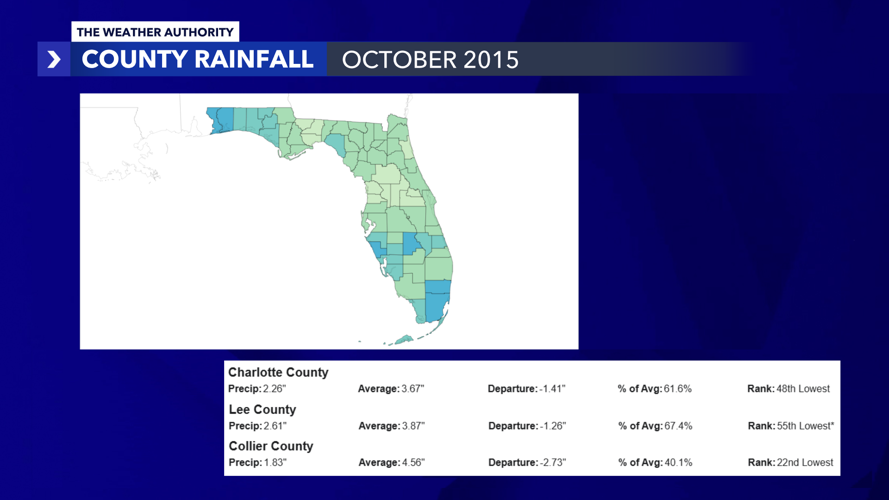
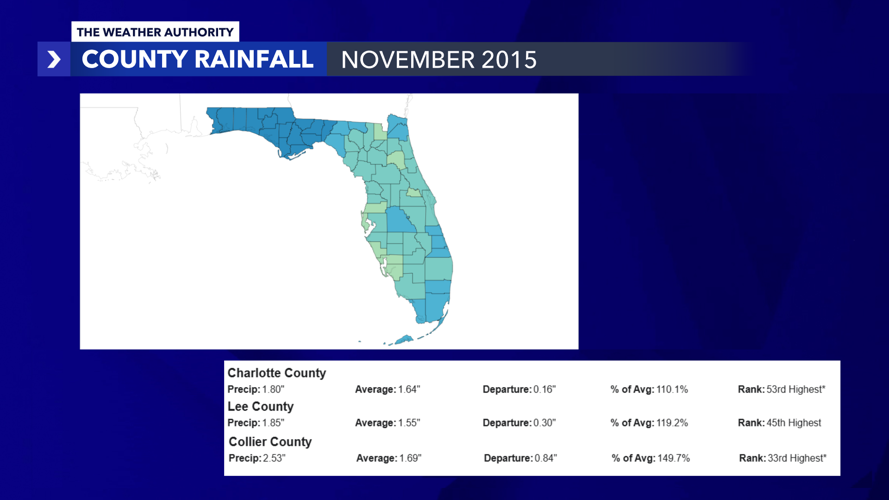
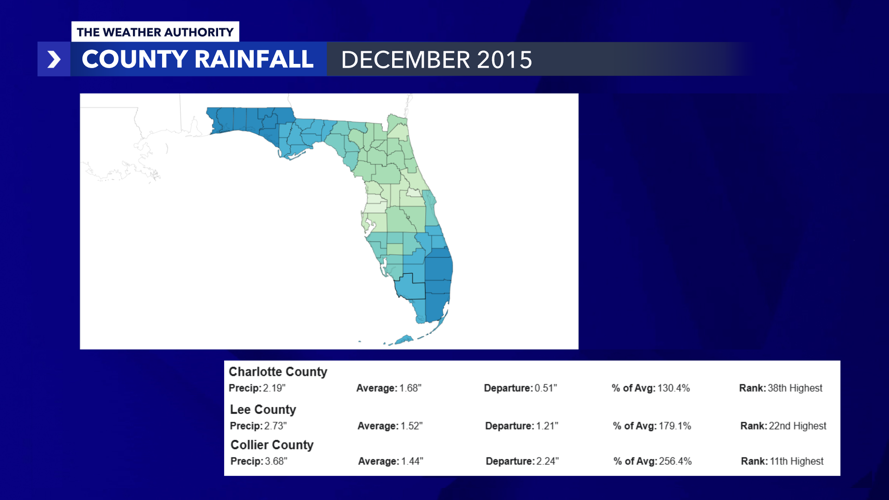
November 2015 started the season on a relatively modest note, with rainfall above average across all three counties. But the pattern intensified in December. Lee County received 2.73 inches, or 179% of average, while Collier County picked up 3.68 inches—more than two and a half times its December average. Charlotte County received 2.19 inches, also above average.

Then came January. January 2016 was the standout month of the entire season. Charlotte County received 9.17 inches, Lee County 9.54 inches, and Collier County 8.77 inches. All three counties ranked January 2016 as their wettest January on record, with rainfall reaching roughly 5 to more than 6 times the monthly average.
That one month completely changed the character of the winter. Instead of Southwest Florida gradually drying out, the region was dealing with repeated rounds of heavy rain during what is normally one of the driest times of the year.

February remained wetter than average as well. Charlotte County received 3.27 inches, Lee County 2.52 inches and Collier County 2.15 inches. While not nearly as extreme as January, it extended the wet pattern into another month.
This wasn't simply a case of one unusually rainy day. The persistence of the pattern is what made the 2015–16 El Niño so memorable. December and January were the heart of the event locally, with January standing out by a wide margin.
So what does all of this mean for Southwest Florida this winter?
The analysis of what happened in years past point to a forecast that strongly favors a wetter, cloudier, and cooler than normal winter. WINK Weather Authority Meteorologists expect this El Niño to remain strong through the winter, with an unusually high chance of becoming one of the strongest events on record.
While past history points to a very wet winter, it doesn't mean every day will be cool and rainy. Southwest Florida will still have plenty of warm, dry days. But compared with a typical winter, the overall pattern favors more rain, more cloud cover and more frequent stretches of cooler temperatures.
When thinking of your plans outdoors on the golf course or in your own backyard this winter know that more frequent rainfall, cooler temperatures and fewer extended dry stretches will create additional challenges for turf management, irrigation planning, course landscape maintenance and overall grass conditions through the winter months.